

TL;DR:
- Prepaid electricity plans in Texas require no credit check and avoid large deposits, enabling same-day activation.
- While they have higher rates per kWh, prepaid plans offer better access, flexible terms, and real-time usage control.
- Choosing prepaid benefits credit-challenged households by improving budgeting habits and avoiding costly deposits.
Getting electricity in Texas when you have poor or no credit feels like hitting a wall. Traditional providers often demand credit checks and upfront deposits ranging from $100 to $400 before they’ll flip your switch. But Texas’s deregulated energy market gives you real choices, including prepaid plans that skip the credit check entirely and activate the same day. This guide walks you through exactly what to look for, which options work best, how they compare side by side, and the steps to get powered up fast without tying up your cash in a deposit.
Table of Contents
- Understand the key criteria before choosing a provider
- Evaluate prepaid electricity plan options in Texas
- Compare prepaid and traditional electricity plans
- Practical steps to sign up and switch quickly
- The overlooked advantage of prepaid electricity for credit-challenged Texans
- Activate prepaid, no-credit electricity in Texas today
- Frequently asked questions
Key Takeaways
| Point | Details |
|---|---|
| No credit check needed | Many Texas providers offer prepaid electricity requiring no credit check or deposit. |
| Fast same-day activation | Prepaid electricity services can often turn on your power the very same day you apply. |
| Prepaid pros and cons | Prepaid plans avoid large deposits, but higher rates may cost more if you use lots of electricity. |
| Compare before you decide | Always compare plan details—rates, deposit policies, and reviews—to find your best fit. |
Understand the key criteria before choosing a provider
Before you sign anything, you need to know what separates a good provider from a frustrating one. The electricity market in Texas is open and competitive, which means dozens of providers are competing for your business. That’s a good thing. But it also means you need a clear filter to cut through the noise quickly.
Here are the essential criteria to evaluate every provider against:
- Credit check and deposit requirements: Does the provider run a hard credit check? Will they demand a deposit before activation? Some traditional providers charge deposits equal to two months of estimated usage.
- Prepaid vs. postpaid plans: Postpaid plans bill you after you use electricity, often with credit checks upfront. Prepaid plans let you pay in advance and use electricity until your balance runs low.
- Rate structure: Fixed rates lock in a set price per kWh (kilowatt-hour, the unit your electric meter measures). Variable rates fluctuate with the market. Prepaid rates often run higher per kWh but carry no deposit or credit requirement.
- Speed of activation: Can you get power today? Same-day and next-day activation matters enormously if your power was disconnected or you’re moving in immediately.
- Customer reviews and complaint ratings: The Public Utility Commission of Texas (PUC) tracks formal complaints. Providers with low complaint rates and high Google review scores generally deliver better service.
- Hidden fees and contract flexibility: Watch for monthly recurring charges, disconnection fees, and minimum usage fees buried in the Electricity Facts Label (EFL), a required disclosure document in Texas.
Pro Tip: Go to Google Maps and search your target provider’s name. Sort reviews by “Most Recent” to see what customers experienced in the past 60 to 90 days. Recent patterns tell you more than an average star rating.
For example, key questions for providers can help you build a checklist before you call or visit a provider’s website. Having those questions ready shaves time off the decision process when you need power fast.
One real benchmark worth knowing: Payless Power rates around 18 to 19 cents per kWh at 1,000 kWh usage, compared to traditional fixed plans running 8 to 14 cents. That sounds expensive, but when the alternative is a $100 to $400 deposit you can’t afford, paying a slightly higher rate for a month or two can actually make more financial sense for tight budgets.
Evaluate prepaid electricity plan options in Texas
Prepaid electricity works exactly like a prepaid phone plan. You add money to your account, the provider draws down your balance as you use power, and you get alerts when it runs low. There’s no end-of-month bill surprise and no credit check standing between you and the lights turning on.
Here’s why prepaid is genuinely strategic for credit-challenged Texans, not just a fallback:
- No credit check required: Providers activate your account based on your address and payment, not your credit score.
- No large deposit: You typically start with as little as $20 to $50 to fund your initial balance.
- Same-day activation is realistic: Many prepaid providers can activate service within hours of enrollment.
- Real-time usage control: You see your balance and daily usage through an app or online account, making it easy to catch energy waste early.
- No long-term contract: Leave without penalties when your situation improves.
The most significant tradeoff is the per-kWh rate. As noted, prepaid plan rates run around 18 to 19 cents per kWh for prepaid providers like Payless Power, while traditional fixed plans range from 8 to 14 cents. For an average Texas household using 1,200 kWh per month, that’s a meaningful difference. But the absence of a deposit and the ability to get power today changes that math for anyone without $200 to $400 sitting in savings.
“The real cost of a plan includes the deposit you pay upfront, the rate per kWh, and the fees you encounter monthly. For someone without savings, a no-deposit prepaid plan often costs less in total over the first two months than a low-rate plan with a $300 deposit.”
To find no deposit electricity options across Texas, you need to know which providers operate in your utility zone. Texas is divided into regional utilities: Oncor covers the Dallas and Fort Worth area, CenterPoint serves Houston, and AEP covers western and northern regions. Your address determines which utility delivers your power and, therefore, which retail providers can serve you.
For residents who want electricity with no credit checks, prepaid plans remove the most common barrier between you and an active account. And once you’re enrolled, the benefits of prepaid electricity extend beyond convenience into genuine budget management.
Here’s how to get started with a prepaid plan:
- Confirm your Texas service address is in a deregulated area.
- Identify which utility delivers your power (Oncor, CenterPoint, or AEP).
- Search providers offering prepaid plans in your utility zone.
- Review the Electricity Facts Label for rates, fees, and terms.
- Create your account online, confirm your service address, and fund your balance.
- Expect activation within a few hours on business days.
Compare prepaid and traditional electricity plans
Numbers on their own can be hard to interpret. Seeing them side by side makes the decision much clearer. Here’s a direct comparison of how prepaid and traditional plans stack up on the features that matter most when you need power fast and have credit concerns:
| Feature | Prepaid plans | Traditional fixed plans |
|---|---|---|
| Deposit required | None (typically) | $100 to $400 |
| Credit check | No | Yes, usually |
| Rate per kWh | 18 to 19 cents (at 1,000 kWh) | 8 to 14 cents |
| Activation speed | Same day, often within hours | 1 to 3 business days |
| Contract length | None, month to month | 6 to 24 months common |
| Customer reviews | 4.2 to 4.8 out of 5 on Google | Varies widely |
| PUC complaints | Low | Varies by provider |
| Usage alerts | Real-time, daily notifications | Monthly bill only |
The numbers tell a clear story. Traditional fixed plans win on rate per kWh, but prepaid wins on every accessibility metric: no deposit, no credit check, faster activation, and no contract lock-in. The Payless Power benchmark at 18 to 19 cents per kWh with 4.2 to 4.8 out of 5 Google reviews and low PUC complaints shows that high-rated service doesn’t have to mean high deposits.
When prepaid makes the most sense:
- You’ve been disconnected and need power today.
- You have no savings available for a deposit.
- You’re in a short-term rental or transitional housing.
- You want to monitor and control your usage in real time.
- Your credit history is limited or damaged.
When traditional plans work better:
- You have good credit and savings for a deposit.
- You plan to stay in the same home for 12 to 24 months.
- Locking in a lower long-term rate matters more than flexibility.
Understanding variable vs. fixed rates also matters here. A variable-rate plan might seem appealing because it sometimes beats fixed rates, but it can spike dramatically during Texas weather events. Prepaid plans typically carry a flat daily or per-kWh rate that’s predictable, which is useful for people budgeting on a weekly basis.
Key stat: A household avoiding a $300 deposit by going prepaid effectively keeps $300 in their pocket on day one. Even if they pay 5 cents more per kWh, it would take over 6,000 kWh of usage just to reach that deposit amount in extra rate costs. That’s about five months of average usage in Texas.
Practical steps to sign up and switch quickly
Once you’ve decided on a plan type, speed matters. Here’s a practical, no-wasted-steps process for getting enrolled and switched over quickly:
-
Gather your information before you start. You need a valid photo ID, your full Texas service address, and a payment method (debit card, credit card, or in some cases a money order). If you’re switching providers, having your current or previous account number nearby can speed up the address verification.
-
Choose your plan with clear eyes. For anyone with credit concerns or limited cash, a prepaid plan is the right starting point. Visit the provider’s website and look for the EFL before completing enrollment. The EFL is a required document in Texas that spells out your exact rate, all fees, and contract terms.
-
Sign up online or by phone. Most prepaid providers have fast online enrollment. Look specifically for language like “no credit check required” and “instant approval” on the sign-up page. If you prefer a phone call, most providers have enrollment agents available during business hours.
-
Fund your account immediately. Your service usually activates only after your initial balance payment is confirmed. A starting balance of $30 to $50 is often enough to trigger same-day activation, though requirements vary. Pay right away to avoid delays.
-
Confirm your activation time. After enrollment, you should receive a confirmation with an estimated activation time. On weekdays during business hours, same-day activation is common. Weekends and holidays may push activation to the next business day.
-
Set up usage alerts. Almost all prepaid providers offer text or email alerts when your balance drops below a set threshold. Configure these immediately so you’re never caught off guard by a low balance.
Pro Tip: Have your payment method and service address pulled up on screen before you open the enrollment page. Every minute of searching for your debit card or looking up your zip code adds friction. Providers that offer easy sign-up steps make the process faster, but your own preparation matters just as much.
Switching providers mid-contract with a traditional plan can trigger an early termination fee. Prepaid plans don’t have this problem because there’s no contract. If you’re currently on a traditional plan and want to switch, check your EFL for any cancellation penalties before you make the move. For step-by-step details on how to set up electricity no credit, a focused guide can walk you through each field in the enrollment process.
The overlooked advantage of prepaid electricity for credit-challenged Texans
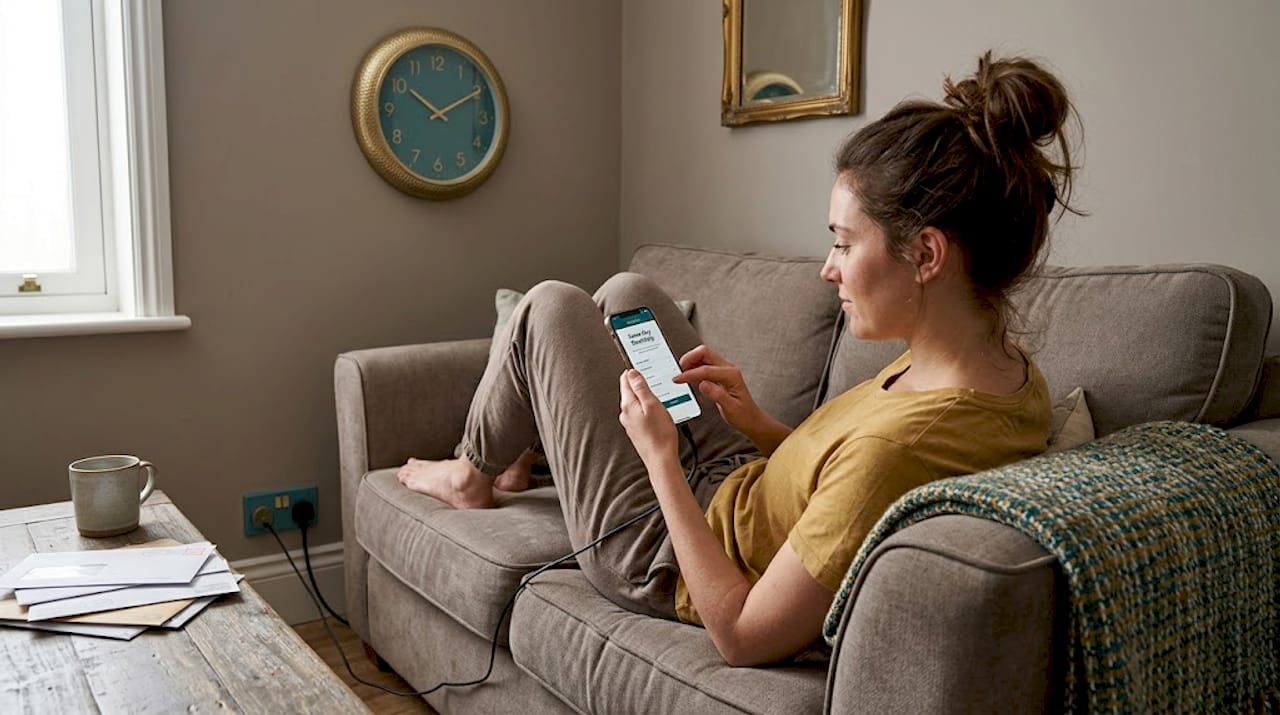
Here’s something most energy articles won’t tell you: being pushed toward a prepaid plan because of credit challenges might actually be the best thing that could happen to your household budget. Not because prepaid is cheap per kWh, it isn’t. But because of what it does to your relationship with your energy usage.
Traditional postpaid billing is designed for people who don’t think about energy. You use whatever you use, get a bill in 30 days, and pay it. There’s no feedback loop in between. Prepaid creates a feedback loop by default. You watch your daily consumption, you see your balance drop, and you start making different choices. Turning off the A/C when you leave becomes instinct, not willpower.
The credit system in Texas treats people without strong scores as high-risk energy customers. That logic feels outdated when prepaid plans with no deposit required show customer satisfaction scores of 4.2 to 4.8 out of 5 and among the lowest complaint rates filed with the PUC. The so-called “risky” customers are paying their balances in advance and staying enrolled. That’s not risk. That’s discipline.
There’s also a bigger financial picture here. Someone who avoids a $300 deposit has $300 free to handle a car repair, cover groceries, or start a small emergency fund. That money working in your favor can do more than the few cents per kWh you’re paying above the traditional rate. Short-term flexibility often creates long-term stability. Use the prepaid period intentionally: track your usage, keep your balance funded, and you’ll be building better financial habits that eventually support qualifying for better plan rates.
Activate prepaid, no-credit electricity in Texas today
If you’ve read this far, you have everything you need to make a confident decision. Choosing the right electricity provider when credit is a concern doesn’t have to be complicated. Texas’s deregulated market puts real options in your hands.
Same Day Electricity connects Texas residents to fast, flexible prepaid plans with no credit checks and no large deposits required. Whether you’re in a major metro or a smaller community, options exist that can get your power on today. Residents in coastal and rural areas can explore prepaid electricity Palacios and other city-specific plans designed for local utility zones. For a full breakdown of why no deposit options are worth it, see Texas no deposit benefits with clear, real-world detail. When you’re ready to act, same day power activation walks you straight into the enrollment process for the fastest path to an active account.
Frequently asked questions
Can I get electricity in Texas with no credit check and no deposit?
Yes, prepaid electricity providers in Texas offer plans with no credit checks and typically no deposits required, making service accessible regardless of your credit history. Some providers like Payless Power activate accounts based only on your address and initial balance payment, not your credit score.
How long does it take to activate prepaid electricity service?
Most prepaid electricity services in Texas can activate on the same day, often within a few hours after you submit your payment and enrollment details. Activation during evenings, weekends, or holidays may roll to the next business day, so morning enrollment on a weekday gives you the best chance of same-day power.
Are prepaid electricity plans more expensive in the long run?
Prepaid plans carry higher per kWh rates, around 18 to 19 cents compared to 8 to 14 cents for traditional fixed plans, but eliminate the $100 to $400 upfront deposit and offer real-time usage control. For short stays or tight budgets, the total cost can actually be lower over the first few months.
What information do I need to sign up for a new electricity provider?
You’ll need a valid photo ID, your Texas service address, and a payment method like a debit or credit card. Having a prior account number available can speed up address verification, but it’s usually not required to complete enrollment with a prepaid provider.