

TL;DR:
- Monitoring your prepaid balance daily and setting alerts prevents unexpected disconnections.
- Reading and understanding plan disclosures avoids hidden fees and service risks.
- Prepaid protections are limited; critical care status and high buffers are essential for vulnerable customers.
Losing power without warning is one of the most stressful things that can happen at home, especially in the middle of a Texas summer. Prepaid electricity plans are a lifeline for residents with poor or no credit because they skip the deposit requirement and credit check entirely. But that fast access comes with real traps that trip up thousands of Texans every year. Miss a balance check, skip the fine print, or assume same-day power is automatic, and you could find yourself in the dark faster than you think. This article walks through the four most common prepaid electricity mistakes, who is most at risk, and exactly what to do to keep your power on and your costs manageable.
Table of Contents
- Failing to monitor your balance: the fastest way to lose power
- Overlooking prepaid plan disclosures and fine print
- Missing disconnection protections and consumer safeguards
- Assuming instant activation or ignoring plan eligibility
- Why these prepaid electricity mistakes keep happening in Texas
- Need reliable, affordable prepaid electricity in Texas?
- Frequently asked questions
Key Takeaways
| Point | Details |
|---|---|
| Watch account balance | Monitor your prepaid balance often to prevent sudden disconnections and extra fees. |
| Read plan disclosures | Check all plan documents for hidden fees, rate details, and important rules before you sign up. |
| Know your protections | Understand that prepaid plans often offer fewer safety nets than traditional electricity plans. |
| Plan for activation | Same-day activation isn’t automatic—make sure you meet all requirements to avoid delays. |
Failing to monitor your balance: the fastest way to lose power
This is the number one reason prepaid customers lose power, and it happens more often than most people expect. Unlike a postpaid plan where you get a monthly bill and a grace window, prepaid electricity works like a pay-as-you-go phone. When the money runs out, the power stops. No warning, no buffer. Your account balance is the only thing standing between you and a dark apartment.
According to PUCT advice, unexpected disconnections happen when balances fall below the disconnection threshold, often set at $10, with little or no advance notice. That means a $9 balance at midnight could leave you without air conditioning by morning in July.
The fix is simple, but it requires habit. Here is a four-step routine that actually works:
- Check your balance every morning. Treat it like checking your bank account. Most providers have an app or a website portal where you can see your balance in seconds.
- Set up text or email alerts. Most prepaid providers let you configure low-balance notifications. Turn these on immediately when you sign up. Monitoring balance tips from experienced prepaid users consistently point to alerts as the single most effective tool.
- Add money before you hit $20, not $10. Waiting until the disconnection threshold is cutting it too close. If you set your personal minimum at $20, you give yourself a real buffer for unexpected high-usage days.
- Use auto-pay if your budget allows. Some providers offer automatic top-ups when your balance drops to a set level. This removes the human error factor entirely. Look for accounts with alert options that include auto-reload features.
Pro Tip: Set a daily phone alarm labeled “check electric balance” for the same time every morning. It takes ten seconds and eliminates the single biggest cause of avoidable disconnections.
Reactivation after a shutoff is not free. Most providers charge a fee to restore service, and you may have to wait hours for power to come back on. That cost in money and discomfort is completely avoidable with a consistent monitoring habit.
Overlooking prepaid plan disclosures and fine print
Once you have your balance monitoring locked in, the next trap is the paperwork you probably skipped at signup. Every prepaid electricity plan in Texas comes with two required documents: the Prepaid Disclosure Statement (PDS) and the Electricity Facts Label (EFL). These are not optional reading. They spell out every fee, rate, and rule that governs your account.
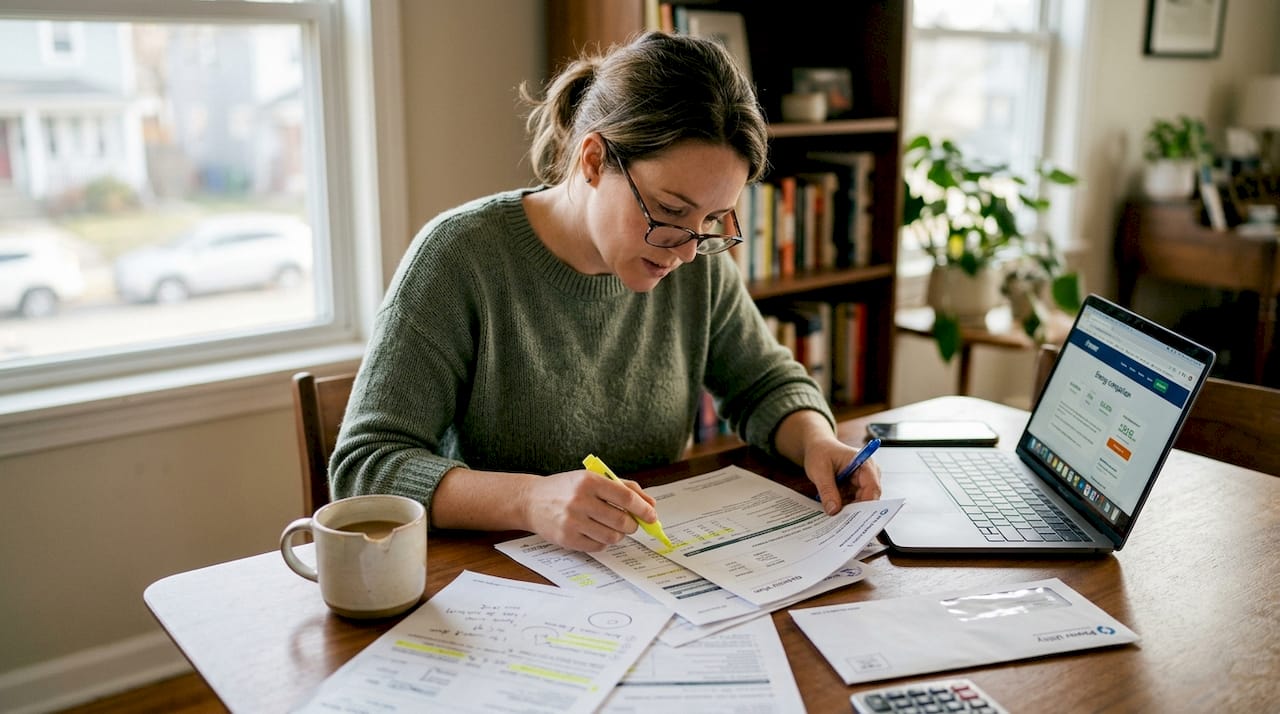
Not reviewing plan documents before enrolling means you may be agreeing to fees you never anticipated, like charges for paper billing, penalties for letting your balance drop too low, or reactivation costs that vary by provider. The Prepaid Disclosure Statement details are required to be clear, but many customers sign up quickly and never open the documents.
Here is what to look for before you enroll in any prepaid plan:
- Payment minimums: Some providers require a minimum initial deposit or a minimum top-up amount each time you add funds.
- Notification rules: How many hours of notice will you get before disconnection? Some plans give 24 hours, others give far less.
- Fee structures: Look for low-balance fees, paper statement fees, and reactivation charges. These are real costs that add up.
- Customer eligibility: Some plans exclude customers who are already on a state assistance program or who have medical baseline needs. Read the exclusions carefully.
- Rate structures: Is your rate fixed or does it change with usage levels? Some plans charge a higher rate per kilowatt-hour once you exceed a monthly threshold.
If you are on a low-income assistance program or have a medical condition that requires consistent power, the fine print matters even more. Some programs may not stack with prepaid plans, and medical protections may be limited unless you are designated as a critical care customer by your utility.
Pro Tip: Screenshot or download your PDS and EFL documents the day you sign up. Save them to a labeled folder on your phone so you can check fees and policies any time without digging through emails.
Choosing a prepaid plan that fits your actual needs starts with reading these documents, not skipping them.
Missing disconnection protections and consumer safeguards
Beyond your account balance and plan details, you need to understand something that surprises many new prepaid customers: you have fewer legal protections than postpaid customers. This is not a rumor. It is baked into how prepaid electricity is regulated in Texas.
Postpaid plans include grace periods, meaning your provider cannot cut off your power the instant a bill is overdue. Prepaid plans operate differently. As Texas prepaid plan protections outline, there is no required grace period for prepaid accounts, and service can be disconnected as soon as your balance is depleted, even on weekends or holidays.
“Prepaid customers face different protections compared to traditional service. There is no mandated grace period, and weather-related disconnection rules may not apply in the same way.” — PUCT guidance on prepaid electricity
Here is who is most at risk and what you can do:
- Seniors and people with medical needs: If your health depends on air conditioning or powered medical equipment, apply for critical care customer status through your utility. This gives you specific protections that most prepaid accounts do not include by default.
- Families with young children: Children are especially vulnerable in extreme heat. Keep a higher balance buffer during summer months, which run from May through September in Texas.
- Renters in older buildings: Buildings without smart meters in regional disconnection policies areas may face delays in reconnection even after you reload your balance.
- Anyone without emergency savings: If a disconnection fee would strain your budget, the best defense is to never let it happen. Set your personal low-balance trigger at $25 or higher.
Before summer hits, take these steps: confirm your critical care status if applicable, set higher balance minimums, and review your provider’s specific weather disconnection policy. Do not wait for a heat wave to find out what protections you do or do not have.
Assuming instant activation or ignoring plan eligibility
Same-day electricity activation sounds like a promise, but it is actually a set of conditions. If those conditions are not met, you could be waiting longer than expected, which is a serious problem if you have just moved and need power today.
The activation requirements explained break down into four key factors: a smart meter at your address, enrollment before the provider’s daily cutoff time (often between noon and 3 p.m.), a location within a deregulated Texas market, and no active switch hold tied to unpaid bills at that address. Miss any one of these and same-day activation may not be possible.
Here is a quick-reference table to understand what affects your activation timeline:
| Requirement | What it means | What to do if not met |
|---|---|---|
| Smart meter installed | Required for remote switching | Contact your utility to request installation |
| Enrollment before cutoff | Typically noon to 3 p.m. | Enroll early in the morning for same-day service |
| Deregulated service area | Only in markets like Oncor, CenterPoint, AEP | Confirm your zip code qualifies before signing up |
| No switch hold | Prior unpaid balance blocks the switch | Resolve the outstanding balance with the prior provider |
Follow these steps to confirm eligibility and speed up your connection:
- Enter your zip code on the provider’s website before starting enrollment to verify your area is deregulated.
- Call your utility to confirm a smart meter is installed at your address, not just scheduled.
- Check for switch holds by contacting your previous provider or asking your new one to run a switch hold check.
- Enroll before 10 a.m. to give yourself the best window for same-day activation. Learn more about how same-day activation works so you know exactly what to expect.
- Follow the steps for fast connection to avoid common delays on enrollment day.
Understanding these requirements before you need them saves you from a stressful situation on move-in day.
Why these prepaid electricity mistakes keep happening in Texas
Here is an honest observation: the prepaid electricity market in Texas does a great job attracting customers and a poor job preparing them for what comes next. The no-credit-check and no-deposit messaging is visible everywhere. The disconnection thresholds, fine print warnings, and limited weather protections are buried in documents most people never open.
This is not an accident. Regulations require providers to make the PDS and EFL available, but there is no mandate for a provider to walk a new customer through the most important risks at signup. The result is that thousands of Texans, particularly those with credit challenges who need reliable power the most, are learning about prepaid limitations the hard way: after a shutoff.
The consumers who avoid these mistakes are not smarter. They are better informed, usually because they took the time to read or found resources that explained the real rules. Prepaid for bad credit Texans can absolutely be a smart, affordable choice. But it works best when you go in with your eyes open, not just with a debit card ready.
Proactive education before and after signup remains the most powerful protection available to prepaid customers. Providers who invest in that education build better long-term customers. Consumers who seek it out keep their power on.
Need reliable, affordable prepaid electricity in Texas?
If the mistakes above sound familiar, you are not alone. Thousands of Texas residents have navigated the same learning curve. The good news is that Same Day Electricity makes it straightforward to get started without a deposit, without a credit check, and with the information you need to stay connected.

Whether you are in Palacios prepaid electricity territory or looking at Arlington no deposit options, there are plans built specifically for residents who need fast, flexible access to power. Review the same-day connection tips to confirm your eligibility and enroll early in the day for the best shot at activation before tonight. Your next step toward reliable power starts here.
Frequently asked questions
How much money should I keep in my prepaid electricity account to avoid disconnection?
You should always keep your balance above $10, since most Texas providers disconnect service below this threshold. A personal minimum of $20 to $25 gives you a safer buffer for high-usage days.
Are there grace periods or special protections for prepaid electricity during extreme weather in Texas?
No, most prepaid plans do not offer grace periods, and extreme weather protections are limited on prepaid accounts. Only customers with a critical care designation receive additional safeguards.
Can I get same-day activation with a prepaid electricity plan in any area of Texas?
No, same-day activation requires a smart meter, enrollment before the daily cutoff, a deregulated service area, and no active switch hold from prior unpaid bills.
Does assistance from state programs or medical needs guarantee prepaid electricity protections?
No, most state assistance programs do not apply to prepaid plans, and medical protections are limited unless you have an official critical care customer designation on file with your utility.