

TL;DR:
- Texas offers fast, flexible, and low-cost renewable energy options, especially wind and solar.
- Prepaid plans with no deposit or credit check are ideal for quick activation and bad credit.
- Battery storage enhances the reliability of renewable energy plans during evenings and peak demand.
Choosing the right electricity plan in Texas can feel overwhelming, especially when you need power fast or have credit challenges standing in your way. Texas leads the nation in renewable energy, with wind and solar accounting for 24.3% and 19.0% of the state’s generating capacity and generation share respectively in 2025. That growth means more competitive pricing, more plan variety, and real opportunities to access clean, affordable electricity without jumping through impossible hoops. This guide breaks down every major renewable energy type available to Texas residents, with honest comparisons built around what actually matters: activation speed, flexibility, and low barriers to entry.
Table of Contents
- How to choose the best renewable energy type in Texas
- Main renewable energy types in Texas: Features and pros
- Comparing Texas renewable energy solutions for affordability and flexibility
- Situational recommendations: Best Texas renewable options for your needs
- What most guides miss about Texas renewables: Smart choices for fast activation
- Affordable, flexible renewable power: Quick solutions for every Texan
- Frequently asked questions
Key Takeaways
| Point | Details |
|---|---|
| Wind and solar dominate | Texas’s main renewable options are wind and solar, offering record capacity and rapid growth. |
| Affordable, flexible activation | Prepaid and no deposit plans using renewables make it easy for residents to start service quickly—even with credit challenges. |
| Batteries improve reliability | Texas’s battery installations support steady power from renewables even during evening hours. |
| Green premiums stay low | Abundant wind and solar help keep costs and green premiums lower in Texas compared to other states. |
How to choose the best renewable energy type in Texas
Now that you understand the market landscape, let’s review your options for renewable energy in Texas. The deregulated Texas electricity market gives you genuine power as a consumer. You’re not locked into one utility’s choices. You can actually shop around and pick a plan that fits your life, your budget, and your timeline.
But the sheer number of options can be paralyzing. The smartest move is to filter your choices through four core criteria before you ever look at a provider’s website.
The four criteria that matter most:
- Activation speed: Can you get power today or tomorrow? If you just moved, lost service, or are facing a shutoff, waiting a week is not an option.
- Credit and deposit requirements: Many residents get blocked at the signup stage because of traditional credit checks. Prepaid and no deposit plans exist specifically to solve this problem.
- Contract flexibility: Month-to-month or prepaid plans let you leave without penalties. Fixed-term contracts can lock you in for 12 to 24 months.
- Affordability of renewable premium: Going green shouldn’t cost dramatically more. In Texas, thanks to renewable capacity totaling over 73,694 MW across wind, solar, biomass, hydro, and landfill gas, the premium for green plans is often just a few dollars per month above standard rates.
Wind accounts for 43,467 MW of that registered capacity, solar for 29,703 MW. That abundance drives competition and keeps prices honest. When you’re choosing a plan, look for providers offering flexible Texas electricity plans so you’re not trapped if your circumstances change.
Pro Tip: If you need power quickly and have credit concerns, skip straight to prepaid renewable plans. They combine same-day or next-day activation with zero credit checks. The easy sign up benefits are real and designed specifically for situations like yours.
Main renewable energy types in Texas: Features and pros
With your criteria set, let’s explore what renewable energy sources Texas actually offers. Texas isn’t a one-trick pony when it comes to clean energy. Each source has distinct traits that affect how reliably it powers your home and what kind of plan you can pair it with.
Wind energy
Wind is Texas’s backbone renewable. At 24.3% of generating capacity and 43,467 MW registered in the PUC’s REC (Renewable Energy Certificate) program, it’s the undisputed king. West Texas and the Panhandle produce most of it. The output tends to peak at night and during cooler months, which actually balances well with solar’s daytime production.
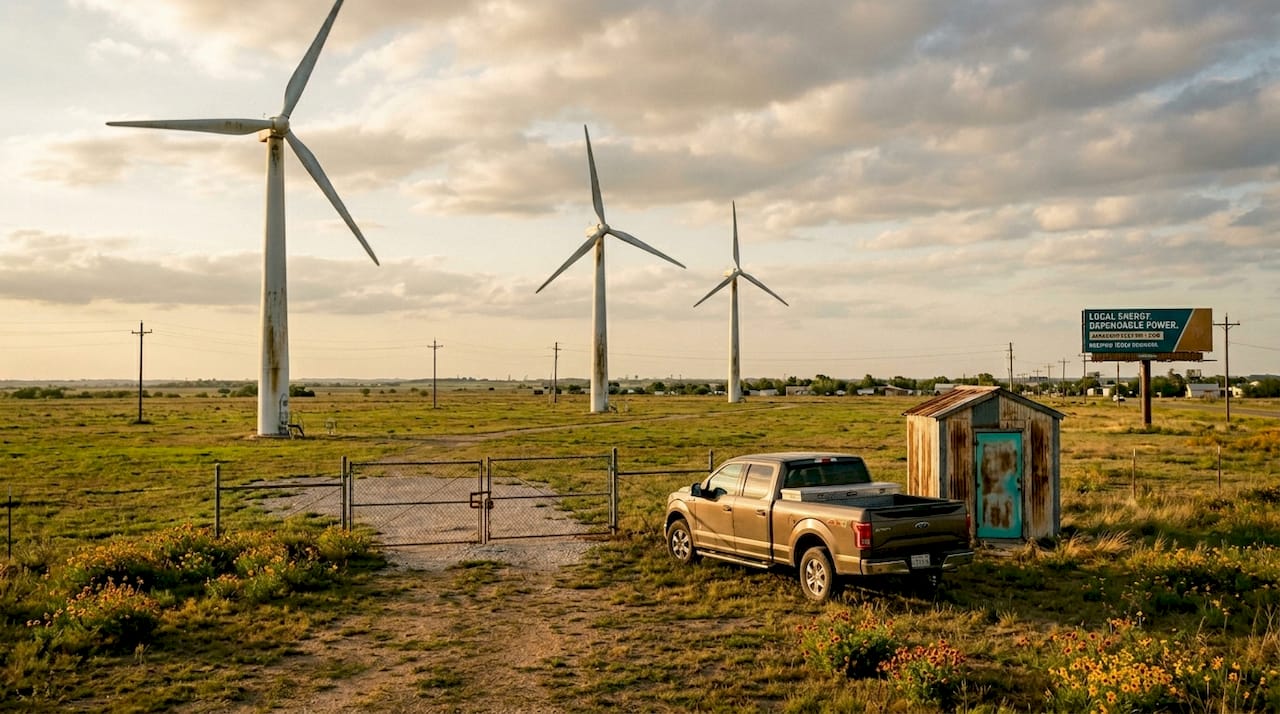
The main challenge: wind is variable. Output drops during still summer afternoons, exactly when Texas demand spikes. Transmission constraints in West Texas also sometimes mean wind power gets curtailed rather than delivered. But those are grid-level issues. From your perspective as a consumer, wind-backed plans are widely available, competitively priced, and easy to activate.
Solar energy
Solar has exploded in Texas. It generates 19.0% of total electricity in 2025 and 29,703 MW of capacity is registered in the REC program. The peak production window is midday, with solar hitting roughly 24 GW at noon during summer 2025. That aligns with air conditioning demand, making solar a natural fit for Texas summers.
The tradeoff: solar output drops after sunset. Evenings are covered increasingly by battery storage (more on that in a moment) and wind energy stepping in. For residents, solar-backed plans are widely available and often carry the lowest green premiums of any renewable type.
Battery storage (supporting renewables)
Texas has installed 14 GW of battery capacity, which discharges around 4 GW at 8pm on peak evenings. This doesn’t generate power itself, but it dramatically improves the reliability of solar and wind plans. If you’ve ever worried that renewable plans would leave you without power during evening hours, batteries are the reason that concern is largely outdated.
Hydro, biomass, and landfill gas
These three sources are small but stable contributors to Texas’s renewable mix.
- Hydroelectric: Only 0.3% of Texas generation comes from hydro. The state simply doesn’t have the geography for large-scale hydro production. Registered capacity is just 157 MW.
- Biomass: 286 MW registered capacity. Biomass plants burn organic materials (wood chips, agricultural waste) to generate electricity. Output is consistent and not weather-dependent, making it a reliable baseload source.
- Landfill gas: 81 MW registered. This captures methane from decomposing waste and converts it to electricity. It’s genuinely clean in the sense that it prevents methane from escaping into the atmosphere.
For practical purposes, very few retail electricity plans are specifically labeled as biomass or landfill gas plans. You’ll encounter these sources as minor components of a provider’s overall renewable mix. Wind and solar are where your shopping attention should focus.
The key takeaway: RECs (Renewable Energy Certificates) are how your plan’s green credentials are verified. But they don’t deliver green electrons directly to your home. What travels through the wires is the same electricity everyone uses. What RECs do is ensure that for every kilowatt-hour you use, an equal amount of renewable energy was added to the grid. This keeps premiums low and green accounting honest. For residents using prepaid electricity for bad credit, REC-backed plans are an accessible way to go green without complicated paperwork or upfront costs.
Comparing Texas renewable energy solutions for affordability and flexibility
Now let’s see how these energy types stack up when you look at affordability and flexibility side by side. Texas renewables supply over 36% of ERCOT demand in 2025, and that scale means cheaper RECs and lower green premiums compared to most other states. This is one of the genuinely good deals Texas residents have access to that residents in other states don’t.
Side-by-side comparison
| Renewable type | Capacity (MW) | Affordability | Activation speed | Contract flexibility | Credit barrier |
|---|---|---|---|---|---|
| Wind | 43,467 | Very high | Same day possible | High (prepaid options) | Low (prepaid available) |
| Solar | 29,703 | Very high | Same day possible | High (prepaid options) | Low (prepaid available) |
| Hydro | 157 | Moderate | Standard | Standard | Standard |
| Biomass | 286 | Moderate | Standard | Standard | Standard |
| Landfill gas | 81 | Moderate | Standard | Standard | Standard |
The table makes it clear: wind and solar win on every dimension that matters to residents who need affordable, flexible, fast electricity. Their scale in Texas directly translates to consumer advantages.
What to look for when comparing providers:
- Does the plan use RECs to verify its renewable claim, and from which source?
- Is there a deposit requirement, and if so, how much?
- Can you activate today or tomorrow?
- Is the plan month-to-month, prepaid, or fixed-term?
- Are there early termination fees?
Strategies for managing energy costs in Texas often start with picking the right plan structure before worrying about the rate itself. A slightly higher rate with no deposit or contract beats a lower rate with a $200 deposit and a 12-month lock-in for most budget-conscious households.
If you’re used to comparing traditional electricity plans, exploring Texas energy plan alternatives designed for prepaid or same-day activation can open up options you didn’t know existed.
Situational recommendations: Best Texas renewable options for your needs
After comparing the main options, here are specific recommendations based on your situation. One framework doesn’t fit everyone. Here’s how to think about your specific circumstances.
Step-by-step recommendations by situation:
-
You need power today. Look for wind or solar-backed prepaid plans with same-day activation. These plans require no credit check and no deposit. You pay upfront for a starting balance, and service begins within hours. Comparing Texas providers who specialize in fast activation will save you hours of searching.
-
You have poor credit or past payment issues. Prepaid renewable plans are built for exactly this situation. There’s no credit check because there’s no billing relationship. You prepay and use as you go. Wind and solar plans dominate this category because their low premiums keep the cost of entry reasonable.
-
You want to go green without paying more. Wind-backed plans in Texas often carry the lowest green premium of any state in the US. Because wind and solar outpace demand growth in Texas, RECs are cheap and plentiful. Choosing a renewable plan here costs very little extra compared to a conventional plan.
-
You want maximum flexibility with no long-term commitment. Month-to-month or prepaid plans with wind or solar backing give you this. You can switch providers when a better deal comes along, without paying an early termination fee. Check out the Texas energy rates guide to understand typical rate ranges before committing.
-
You’re worried about reliability during summer peaks or evening hours. Renewables in Texas handled 2025 peak demand without a single ERCOT grid alert and saved consumers over $1 billion. Batteries discharge in the evenings to cover the solar gap. This track record makes renewable plans a legitimate, reliable choice, not just an environmental statement.
Pro Tip: Ask your potential provider specifically what percentage of their plan is covered by RECs and whether those RECs come from Texas-based wind or solar projects. Texas-sourced RECs often carry slightly more environmental value and help local grid stability more than out-of-state certificates.
What most guides miss about Texas renewables: Smart choices for fast activation
To wrap up, here’s a perspective few guides offer but every Texan seeking quick, flexible renewable power should consider.
Most renewable energy guides spend all their time explaining how wind turbines work or what percentage of global energy comes from solar. That’s fine for a science class. It’s useless if you’re sitting in a new apartment with no electricity and a credit score that’s seen better days.
The real conversation about Texas renewable energy should center on two questions: How fast can I get power? And what barriers do I actually have to clear to get it? The answers to those questions matter far more than whether your electrons technically touched a wind turbine.
Here’s what we’ve seen repeatedly: residents choose conventional plans simply because they’re more familiar, even when a renewable prepaid plan would have cost the same, activated faster, and asked for no deposit. The perception that green energy is more expensive or more complicated is outdated in Texas. The state’s renewable abundance has flattened the price difference almost entirely.
There’s also a misconception that you’re “buying” renewable electricity in a literal sense. You’re not. The grid doesn’t sort electrons by source. What you’re doing when you choose a renewable plan is ensuring your consumption is matched by renewable generation added to the grid. That still matters. It still supports the expansion of clean energy in Texas. But it shouldn’t come with a premium that makes it inaccessible to residents who are already stretching their budgets.
The smartest move is to pair fast sign up advantages with a renewable plan that carries no deposit and no long-term contract. That combination gives you clean energy, fast activation, and the freedom to switch if a better deal comes along. In Texas’s competitive market, that deal exists. You just need to know to look for it.
Affordable, flexible renewable power: Quick solutions for every Texan
Ready to act on what you’ve learned? Here’s how you can power up quickly and affordably.
Same Day Electricity connects Texas residents with prepaid, no deposit electricity plans that activate fast, often the same day you sign up. Whether you’re dealing with a first-time connection, a shutoff situation, or simply looking for a cleaner, more flexible plan without a credit check, we have options designed for your reality.
Our plans cover major Texas cities through Oncor, CenterPoint, and AEP service areas. Explore same day activation options if you need power today, or check out no deposit prepaid electricity to see how little it actually costs to start service without a traditional credit check or deposit. Renewable energy and fast, affordable access don’t have to be separate goals in Texas. We can help you get both.
Frequently asked questions
Which renewable energy type is fastest to activate in Texas?
Solar and wind-based plans generally allow the fastest activation, especially through prepaid and no deposit options from Texas providers. These plans skip the credit check entirely, which removes the biggest delay in the signup process, with wind at 24.3% capacity and solar growing rapidly in 2025.
How reliable are renewable-only energy plans in Texas?
Renewable energy plans in Texas performed without issue during 2025 peak demand periods, with no ERCOT grid alerts and over $1 billion in consumer savings recorded. Battery storage and wind output in the evenings help cover the gap when solar drops off.
What are the differences between green energy credits (RECs) and actual renewable power?
RECs verify that renewable electricity was added to the grid equal to your consumption, but they don’t deliver green electrons directly to your home. They keep green plan premiums low by making renewable accountability scalable and market-based.
Can I get renewable electricity in Texas with poor credit or no deposit?
Yes. Many Texas providers offer prepaid plans for bad credit customers that include wind and solar-backed options. No credit check is required because the prepaid model eliminates the billing relationship that typically triggers one.
Are batteries making renewables more practical for Texas homes?
Absolutely. Texas has installed 14 GW of battery capacity, discharging around 4 GW during evening hours when solar production drops. This fills the reliability gap that was once the strongest argument against renewable-only plans.